
The human brain is wired to see structure, logic, and patterns. It helps us make sense of the world. In the 1920s a group of German psychologists developed theories around how people perceive the world around them, called Gestalt principles. article 
Figure-Ground
People instinctively perceive objects as either being in the foreground or the background.

Demonstration of reification in perception from Lehar S. (2003) The World In Your Head, Lawrence Erlbaum, Mahwah, NJ. p. 52, Fig. 3.3, uploaded by the author. A: Standard Kanizsa triangle. B: Peter Tse's Volumetric Worm. C: Idesawa's Spiky Sphere. D: Peter Tse's Sea Monster - wikimedia

Visually, the Parable of Polygons is a good example using our perceptual grouping of shape and color.
Similarity
When things appear to be similar to each other, we group them together. And we also tend to think they have the same function.
(this is tangent to the story of gestalt perception, but Parable of the Polygons is important.)
Proximity
Things that are close together appear to be more related than things that are spaced farther apart.

Space separates perceived groups.
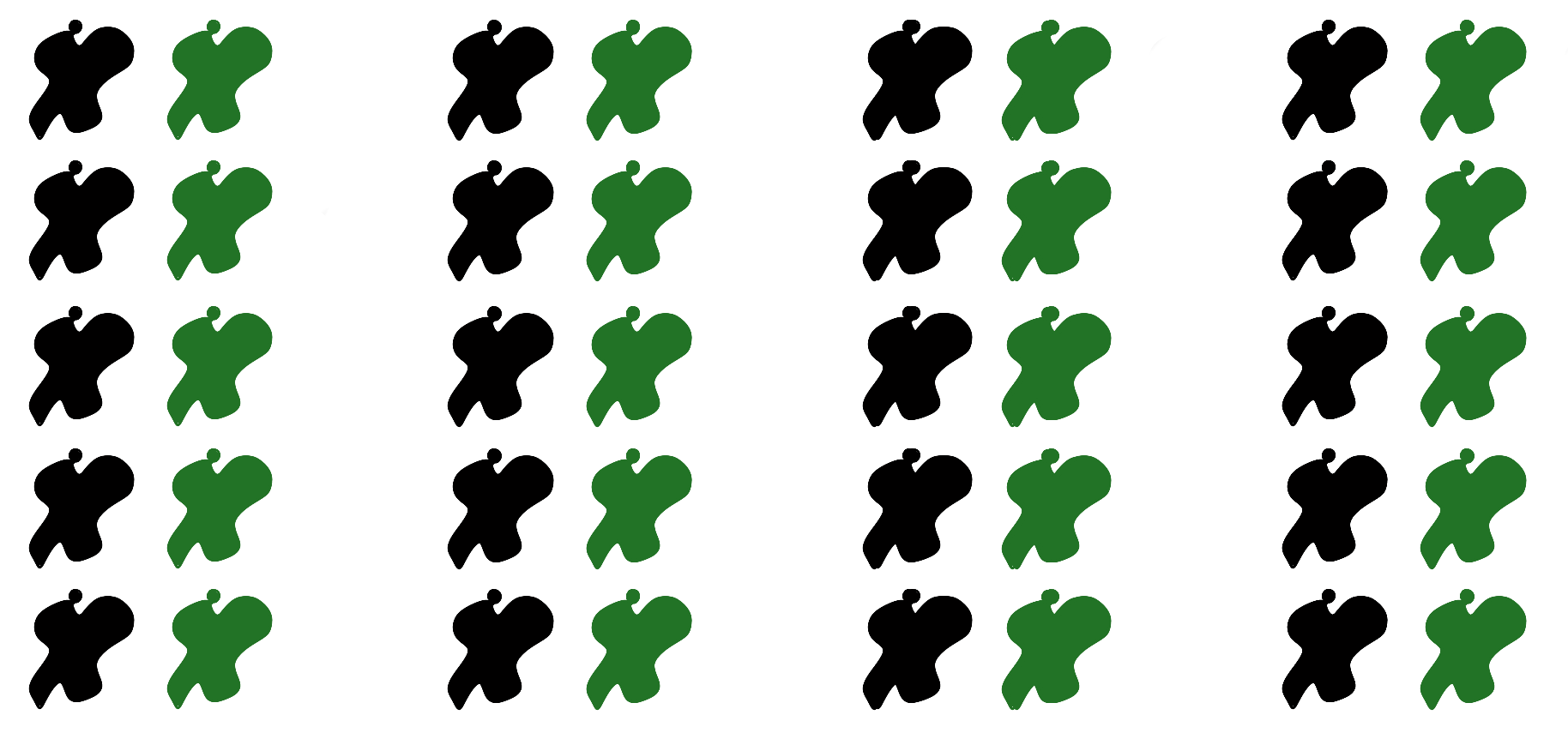
Space affects perceived relationship more strongly than color.
Common Region
When objects are located within the same closed region, we perceive them as being grouped together.

Boundaries are perceived as grouping.
Continuity
Elements that are arranged on a line or curve are perceived to be more related than elements not on the line or curve.
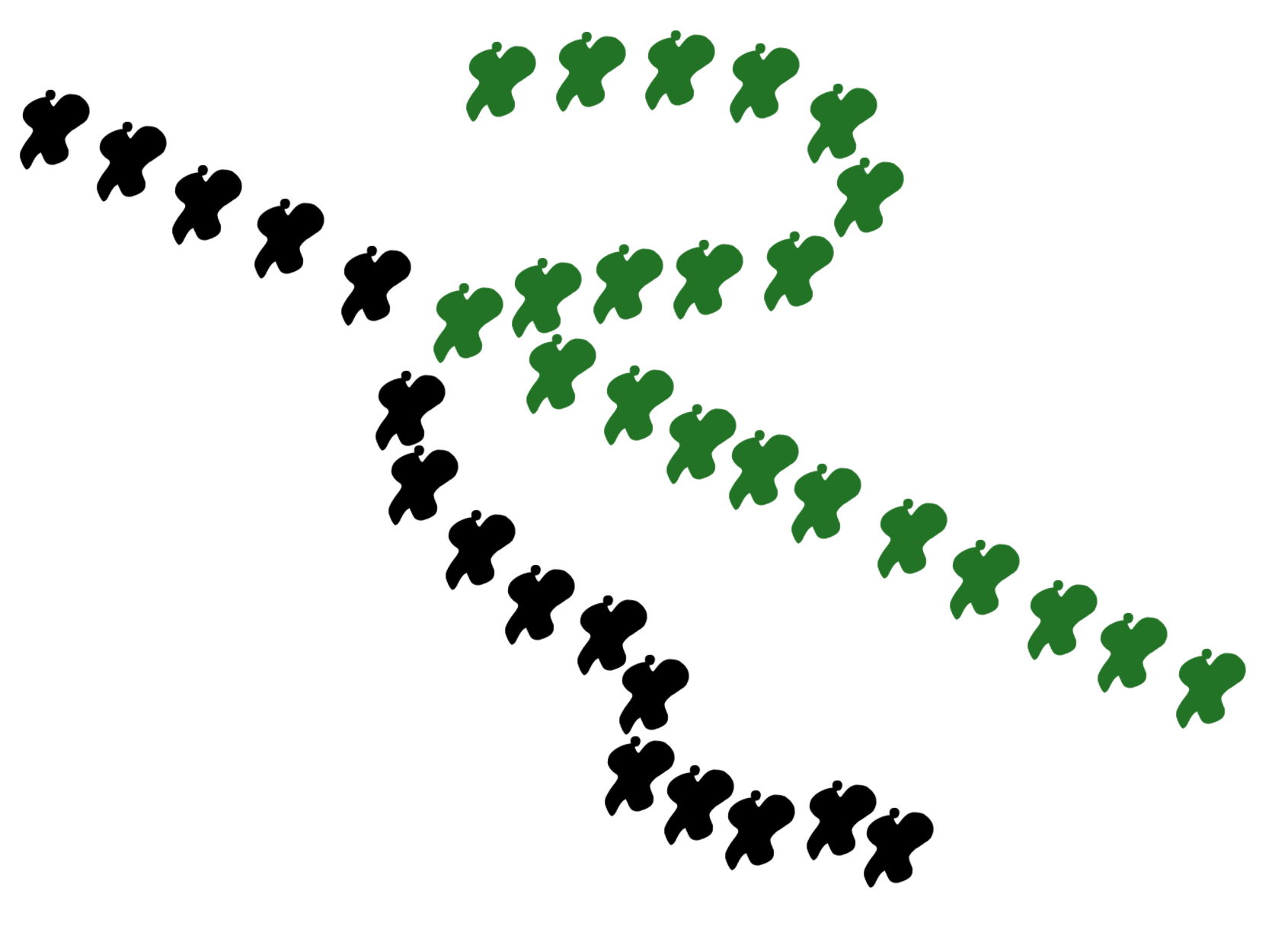
Geometry affects perceived relationship more strongly than color.
Closure
When we look at a complex arrangement of visual elements, we tend to look for a single, recognizable pattern.
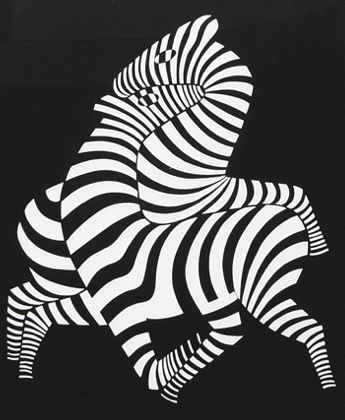
Victor Vasarely zebras play on perception of closure.
Focal Point
Whatever stands out visually will capture and hold the viewer’s attention first.

Our perception is one reason the nail that sticks up gets hammered down.
.
Learning about gestalt perception gave me names for things I do often when doodling. See 2019 Doodles
gestalt-perception